

When people ask Sol Bondy how he became an international film producer, he rarely answers the question they think they’re asking. They expect to hear about Cannes. Or financing. Or the mechanics of international co-productions. Instead, Bondy starts with passports.
“I never really felt a strong sense of nationality,” he says.
In conversation with Millennial, what began as a discussion about producing quickly became one about identity. In Bondy’s mind, the two have never been separate.
The Outsider’s Eye
Ask Bondy about producing and he talks about belonging. Ask about international cinema and he talks about childhood. Ask about success and he talks about understanding.
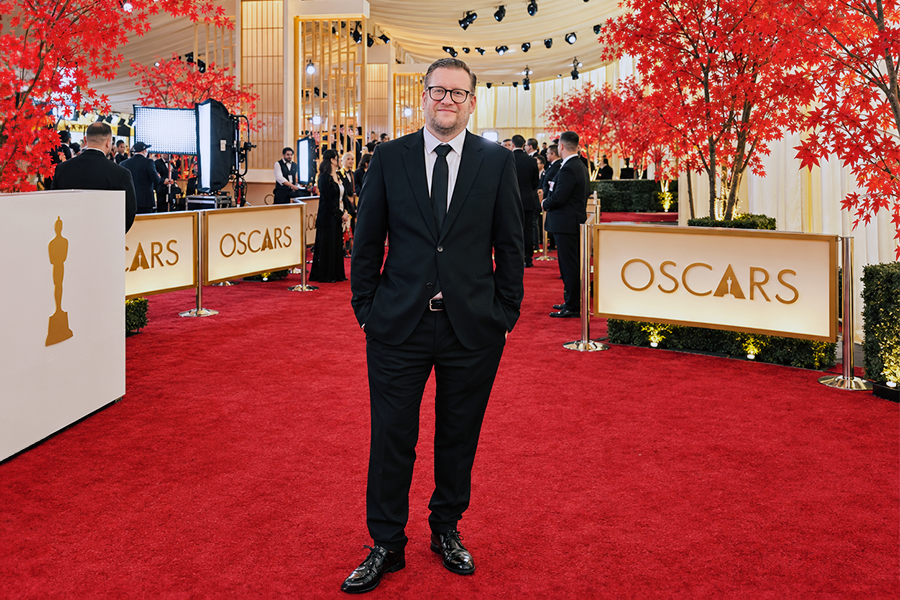
His films have premiered at Cannes, Venice, Berlin and Toronto, earned international acclaim and, most recently, brought him into the orbit of the Academy Awards with The Secret Agent. Yet none of those milestones explain why filmmakers from countries as different as India, Israel, Finland, Brazil and Yemen have repeatedly trusted him with their stories.
The answer begins long before his first production, with an English mother, a German father and a childhood spent in Spain. Spain was home. Then his family moved to Germany. Suddenly, language became identity.
“My German wasn’t perfect yet, so I was always ‘the English kid.'”
His classmates understood him as English. He did not.
“Emotionally, Spain felt much more like home,” he says. “But I wasn’t Spanish either.”
Looking back, Bondy doesn’t describe himself as caught between cultures, but shaped by them. Every Christmas, his family returned to England. British traditions became part of the year, alongside his Spanish childhood and German schooling. His grandmother had been Viennese.
“I had a very early sense of being in an international family.”
The more we talked, the more another pattern emerged. Bondy rarely romanticizes his own life. When I ask whether growing up between countries ever left him feeling isolated, he pauses.
“It made me feel a little different,” he says, “but rather in the sense of feeling special, I guess. Having something the others didn’t have.”
Throughout our conversations, Bondy reframes experiences that might become stories about himself into reflections on perspective. Success becomes collaboration. Setbacks become education. Identity becomes curiosity. Even Brexit, which prompted him to exchange his British passport for a German one, wasn’t a defining moment.
“I never suddenly felt more German,” he reflects. “The only real difference was that I started thinking perhaps I should vote in German elections.”
Politics, nationality and borders never became the organizing principle of his identity. People did. Years later, Bondy saw how childhood may have prepared him for work he couldn’t yet have imagined.
“Looking back,” he says, “I sometimes wonder whether that upbringing is one of the reasons I was so naturally drawn toward international filmmaking.”
Growing up in Germany, Bondy found himself disconnected from much of the country’s mainstream cinema. Film school introduced him to something different. His short films began traveling to festivals, placing him alongside young filmmakers from other countries.
The first group to leave a lasting impression came from Israel. What struck him wasn’t the politics. It was the urgency.
“They had far fewer opportunities than we did in Germany,” he recalls. “But the stories they were telling… they were so much more compelling.”
Many drew from lives shaped by uncertainty and conflict, focusing on families under pressure, impossible moral choices and ordinary people navigating extraordinary circumstances. Their specificity made them universal.
“Germany is, generally speaking, a very comfortable country.”
Comfort produces one kind of story. Urgency produces another.
Festival after festival, Bondy became less interested in where films came from than in what they revealed about the people who made them. Long before he recognized it as a profession, he had begun practicing the instinct that would define his career.
Listening. Not for market potential. Not for awards. For people.
At the time, he still believed he was going to become an actor. The realization that he wasn’t would become the first of many moments in which recognizing someone else’s gift proved more important than pursuing his own.
A Different Kind of Education
For much of his childhood, the future seemed uncomplicated. His parents were documentary filmmakers, so Bondy grew up inside cinema. Film sets were simply places where adults went to work.
His introduction to acting came almost by accident. At a fiftieth birthday party for a family friend, the young Bondy climbed onto a table and sang “Happy Birthday” in German and English. Among the guests was a director of children’s films.
“You’re going to be in my next movie.”
He was.
Between the ages of six and fourteen, Bondy appeared in several television productions and films.
“I definitely never saw myself as a professional actor,” he says. “That’s not being humble, that’s just a fact. If you drag a kid in front of the camera because it can move naturally and remember certain lines… that’s what I was doing, not more.”
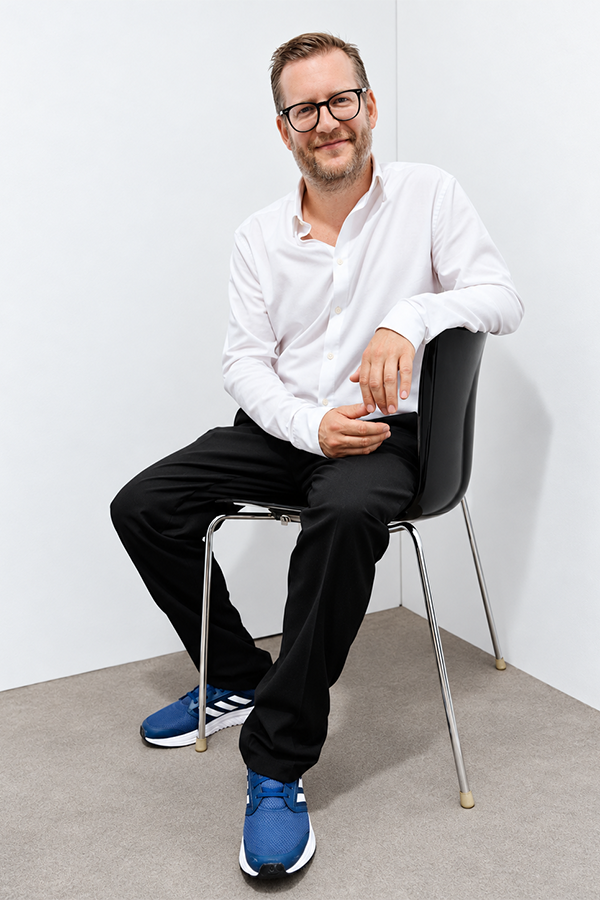
Still, acting was the future he assumed would continue unfolding. Then came the practical next step. Drama school. He began researching conservatories, expecting them to build on the screen acting he knew. Instead, he discovered classical theatre. Long monologues. Schiller. Goethe.
“None of it resembled the television work I knew.”
Perhaps he didn’t want to become an actor after all. His attention drifted toward the people standing just beyond the frame. He remembered the crews from his childhood productions as warm and collaborative. Then, characteristically, he interrupts his own memory.
“Of course, when you’re a child actor, everyone is especially nice to you,” he says with a laugh. “So I probably had a somewhat distorted impression of what film production was actually like.”
That habit surfaces repeatedly over the course of our conversations. Whenever a memory threatens to become too tidy, Bondy complicates it himself.
Curious about filmmaking beyond acting, he asked one of his father’s friends: How do you begin?
“You start with an internship.”
So he did. If childhood taught Bondy that filmmaking could feel welcoming, the internship taught him it could also be unforgiving.
“To be honest, I completely failed that internship.”
He arrived carrying habits that had served him well as a child actor and badly as a young adult. On set, people had always catered to him.
“I assumed the world revolved around me.”
Three months later, the production company had seen enough. Bondy recalled sitting across from the production manager as she explained everything he had done wrong. He listened in stunned silence.
“I remember thinking, ‘Why didn’t anyone tell me sooner?'”
Her answer came immediately.
“‘You’re an intern. Everyone here is busy. Nobody has time to hold your hand.'”
Then came the sentence that has stayed with him ever since.
“‘Other people would cut off their arm to have this opportunity, and you’ve completely wasted it.'”
“I was devastated,” Bondy says. “I started crying. I begged them to give me one more chance.”
Remarkably, they did.
What stayed with him was the realization that professionalism had little to do with talent. It was understanding that everyone else’s time mattered as much as your own.
Years later, another lesson completed the first. At the Thessaloniki Film Festival, Bondy attended a masterclass led by Katriel Schory, then head of the Israel Film Fund.
Schory insisted the most important thing for a producer was to be ‘nice, open and friendly’. People choose collaborators they trust. Bondy carried that lesson with him.
“Going forward, I found myself in situations where I reminded myself to be exactly that person… and this really helped me move forward like nothing else.”
The internship and masterclass became two halves of the same education. One stripped away entitlement. The other offered something worth replacing it with. By then, Bondy still believed he was destined to direct. Life was already steering him toward a different kind of authorship.
A Talent for Others
For three or four years, Bondy applied to directing programs across Germany. The answer rarely changed.
No.
Another application. Another rejection. Another year.
He kept working. Became a first assistant director. Worked in theatre. Studied Comparative Literature for three terms at the University. Continued making short films. Continued applying.
Then, after another unsuccessful application to the German Film and Television Academy (dffb) Berlin, Reinhard Hauff, the director of the dffb, asked: “Why don’t you apply to producing instead?”
Bondy laughs at the memory.
“Honestly… I didn’t really know what a producer did.”
Producing wasn’t a destination. It was another path into the school he wanted to attend.
“‘Why not?'” he remembers thinking.
It was also the first time anyone had told him what he was doing wrong. He listened. This time, he was accepted.
During the first year, every student directed a film. Bondy’s was well received.
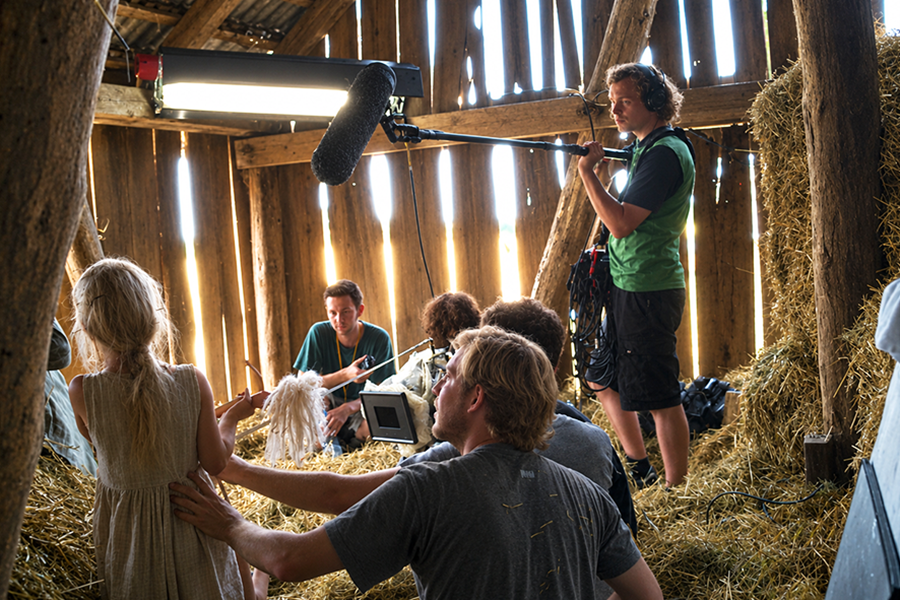
“A lot of people told me, ‘You should keep directing.'”
Instead, another student changed his understanding of excellence. His name was Grzegorz Muskala.
The lesson arrived through observation. He watched Muskala direct. Years later, when I ask whether there was a single moment that redirected his career, Bondy answers without hesitation.
“It was a clear moment.”
“It was actually seeing and witnessing someone else direct… where I ‘got it’ in terms of: ‘wow, now that’s what directing is about.'”
He was describing a form of authorship.
“The vision for that level of detail, the understanding of all different crafts and how they influence the image, that tenacity, that clear will to not rest until the take is perfect.”
It was recognition.
“I suddenly realized, ‘I could never direct like that’. My realization was: if I can identify the people who are exceptionally talented, and I can support these people to the best of my abilities, the results will be amazing.”
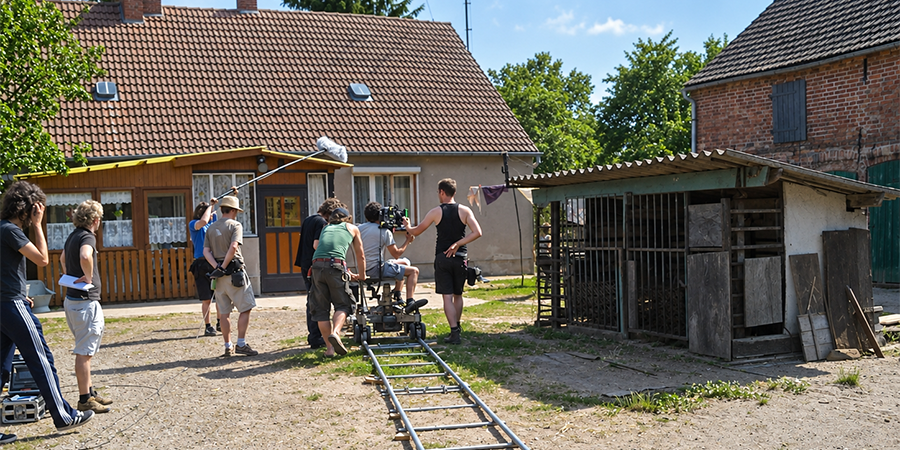
Then he says something that reframes everything that follows.
“I realized I’m an ‘enabler,’ and my job is to find the right people to enable.”
Not producer, financier or executive. Enabler. He often jokes that there were around a dozen directing students in his class.
“With ten of them, I honestly believed I could have directed just as well.”
He smiles.
“But there were two… Two directors who operated on a completely different level.”
The observation stayed with me long after our conversation ended. In an industry built around authorship, Bondy had arrived at an almost countercultural conclusion. His greatest strength wasn’t creating the vision. It was recognizing whose vision deserved everything he could offer.
Sol Bondy Meets His Counterpoint
Another director Bondy met at film school would influence the producer he became.
Julia Langhof was two years behind him in the directing class. Their friendship developed into a relationship after Bondy graduated in 2011, and they later married.
Langhof went on to direct and co-write LOMO: The Language of Many Others, her feature debut, and recently finished directing three episodes of the global Netflix hit The Empress, one of Europe’s biggest television productions. Along the way, she and Bondy also became parents to two children.
Professionally, however, they made an early decision not to work together. “Too much conflict potential.” Instead, their creative partnership, Bondy jokes, took a different form.
“Our big project. There are two kids, and they’ve turned out great so far.”
Langhof’s career has nevertheless influenced his own.
“She’s also shaped me as a producer.”
Rather than collaborators, she became a trusted sounding board.
“Whenever I have issues or problems with other directors she can always give me perspective.”
He laughs when jokingly describing her as “very annoying in my day-to-day life, because she’s mostly right” before conceding that she’s “extremely emotionally intelligent,” helping him “to see things through a director’s eyes.”
“And of course it works vice versa as well, so that makes a good team.”
Bondy’s understanding of directors had begun taking shape years earlier, during his own time as a student. Back at film school, he began collaborating with one of the two directors who had changed the way he understood directing. Their short films traveled internationally. Festivals followed. Awards followed.
Many student producers considered their job complete once the final cut was delivered. Bondy didn’t see it that way. He shakes his head.
“I couldn’t do that.”
He wanted to know where the film would go. Who would discover it. What conversations it might begin.
“I wanted to give every film the best possible life.”
For Bondy, a film wasn’t finished when the edit was locked. It was finished when it found its audience.
The Stories That Travel
When Bondy first imagined life as a producer, he pictured permanence. One director. One trusted crew. The same cinematographer. The same editor.
Instead, his career became an exercise in beginning again. Each film demanded different people. Different languages. Different financing systems. Different customs. Every project required Bondy to become a student before he could become a producer.
One of the first feature films he produced after film school was German. He wanted audiences beyond Germany to believe in it. They didn’t. Not every story travels. Which ones do?
Around the same time, a close friend approached him with an idea. Start a company.
“Honestly, I never would have done it on my own.”
He pauses.
“This close friend believed in me and encouraged me to start One Two Films. He even invested in the company. He’s still my business partner today.”
Long before he became known for enabling other filmmakers, other people had enabled him. One of the company’s earliest opportunities arrived through another introduction. A mutual friend described an Israeli producer:
“‘You two are basically the Israeli and German versions of each other.'”
The producer arrived with two projects. One caught Bondy’s attention. The director was Tom Shoval, whose short films Bondy had admired on the festival circuit. The feature was called Youth. Two brothers kidnap a wealthy teenager from their neighborhood, hoping the ransom money will rescue their struggling family.
Bondy was drawn to something else. Not the crime. The family. The impossible moral compromises. The way ordinary people respond when circumstances leave them with no good choices.
Listening to Bondy describe the film, one thing becomes clear. He is rarely drawn to movies only because of plot. He is drawn to perspective.
How does another human being arrive here? Youth became the first major opportunity to pursue that question as a producer.
When the film premiered at the Berlin International Film Festival and secured international sales through The Match Factory, Bondy saw what was possible. The film traveled worldwide. He still remembers seeing the posters. Not because they represented commercial success. Because they represented connection.
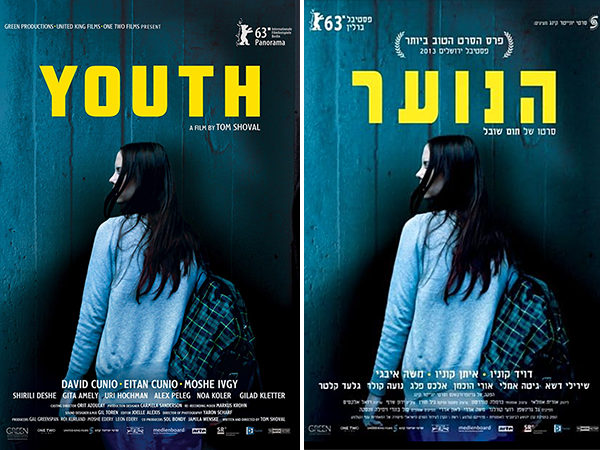
“Seeing posters for one of our films in France… Japan… Brazil… That was incredibly exciting.”
He pauses before adding something that sounds almost apologetic in its sincerity.
“If we can tell stories that help people understand each other across cultures, then—however cheesy it may sound—we’re making the world a slightly better place.”
Throughout two interviews, no idea returns more consistently than understanding. Not agreement. Not persuasion. Understanding.
A passport allows someone to cross a national border. A film allows them to cross a human one.
As the company grew, so did its geography. Israel led to Finland, then India and beyond. Each project brought a different team, culture and way of working. When I ask whether he ever imagined building a career around one director, he smiles.
“Every new project is really a prototype.”
Most producers talk about systems. Bondy talks about ecosystems. Every film, he explains, demands its own.
“A new team.”
He pauses.
“A new culture.”
Another pause.
“A new way of working.”
The child who never fully belonged to one country had become the producer most comfortable moving between many of them.
Teaching eventually became another expression of that philosophy.
Bondy returned to the German Film and Television Academy Berlin as an instructor, where he opened his own productions to students. Instead of hypothetical budgets or fictional case studies, he showed them real financing plans, negotiations, email chains and development processes. Nothing was simplified or sanitized.
“Students always tell me they’ve never seen anyone teach filmmaking that transparently,” he says. “But I firmly believe that’s the only way people truly learn.”
Knowledge isn’t something to protect. It’s something to pass forward. One of those students eventually joined him at One Two Films.
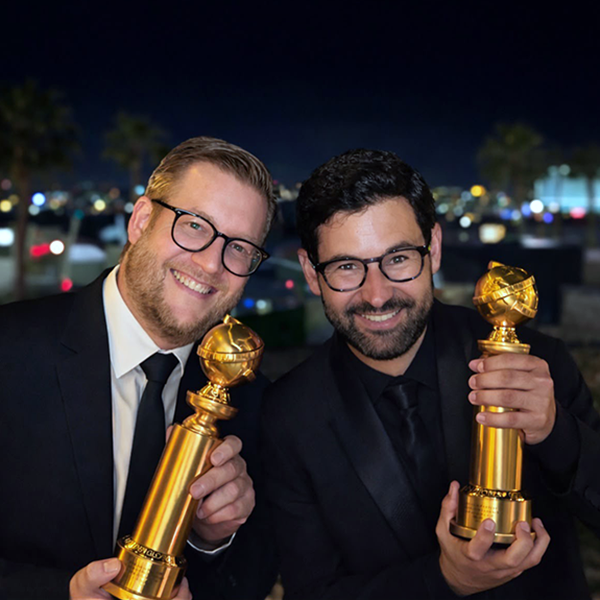
Bondy met Fred Burle while teaching at the film school where he had discovered producing.
“I was actually his last teacher.”
Burle joined the company in 2017 as a project manager, rising to junior producer, producer and, about four years ago, partner.
“He’s just grown and grown so much.”
Over time, mentorship became reciprocal.
“I think in the first years he was able to learn from me and from us and now I learn from him every day because he’s just become so good.”
Their personalities differ, but their ambitions align.
“We’re very very different but we want the same thing so I think we complement each other quite well in terms of our skills and our personas.”
Today, Burle is responsible for as many projects as Bondy, “If not even more.”
“He was the driving force behind The Secret Agent, for example.”
The student had become a peer—and an expression of the philosophy that brought Bondy to producing in the first place: recognize talent and help it flourish.
“Yeah, he’s brilliant.”
By now, Bondy’s career stretched across continents, but the philosophy underneath it had changed little: stories capable of helping audiences understand lives beyond their own.
Then came a film that would redefine, even for him, what producing could mean.
Outside the Frame
There is a point in almost every conversation about filmmaking when the producer disappears. Directors are asked about vision. Actors are asked about character. Cinematographers are asked about light. Then someone mentions the producer. Budgets. Schedules. Financing. And the conversation moves on. The more successful a producer is, the less visible the work becomes.
When I ask whether there is one film that best represents what he actually does, Bondy talks about an editing room in Germany.
Angry Indian Goddesses had already been shot before Bondy became deeply involved. He was brought in during post-production, partly to help secure additional financing, partly to offer creative feedback. He watched the film. Then he took notes. A lot of them.
The filmmakers thanked him. Then they largely ignored them. The film began its festival run anyway.
“‘Please don’t send it out yet.'”
They did.
Festival after festival declined the film. Years later, Bondy recalls a conviction.
“I remember thinking, ‘You have a diamond sitting on that hard drive.'”
He called the filmmakers and asked whether he could work on the material himself.
Eventually, the hard drive arrived in Germany. Officially, Bondy says with a smile, he was preparing a German version. Unofficially, something much larger was happening.
The first decision Bondy made surprised me. It wasn’t about structure. Or pacing. Or length. It was about perspective. The story centered on women: female friendship, agency and anger. Regardless, every major creative voice shaping the edit had been male.
“The film was about female empowerment,” he says. “Yet everyone behind the camera had been a man. I felt the film needed a female perspective during the edit.”
He hired a new editor. A woman. The decision wasn’t symbolic. It was creative.
The editor connected with the footage but resisted cutting much of it. Bondy encouraged her to push further.
“‘No,’ I said, ‘we have to be brave.'”
For roughly three weeks, Bondy sat beside the editor, working through the film together. He watched, questioned, listened and reconsidered. Slowly, they dismantled one version of the film to uncover another.
“I became the primary creative voice throughout that process.”
More than an hour disappeared. Scenes were removed. Characters shifted. The emotional center sharpened.
When the film returned to India, there were disagreements, compromises and revisions, but gradually the edit stopped belonging to one person. It became the film everyone had been trying to make.
Then Bondy started calling the festivals that had already rejected it. Would they watch it again? Toronto did.
This time, the answer was yes. The footage hadn’t changed. The actors hadn’t changed. The story hadn’t changed. The film had.
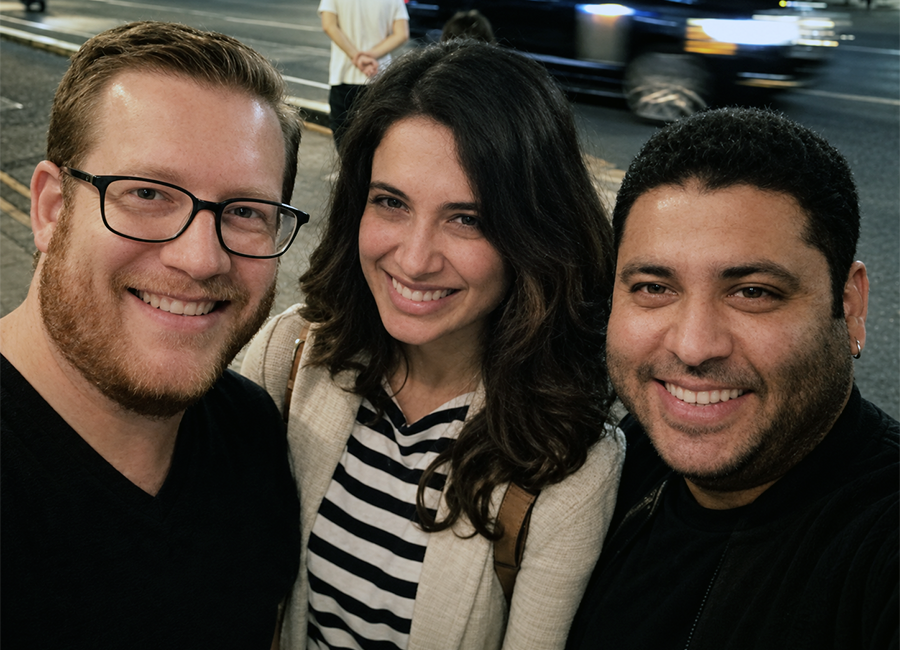
At the Toronto International Film Festival, audiences embraced it. Standing ovations followed. International sales followed. Listening to Bondy tell the story, what stands out isn’t triumph. It’s relief. When I point out that few public accounts mention the creative role he played in reshaping Angry Indian Goddesses, he shrugs. Recognition, he says, has always been complicated for producers.
“Officially I was credited as a co-producer, which was wonderful.”
He smiles.
“Financially, I hadn’t raised a single dollar for that project.”
Then he adds the sentence that matters most.
“But creatively… that was probably my clearest contribution to any film I’ve ever worked on.”
It is one of the few moments during our conversations when Bondy speaks plainly about his own contribution.
Later, I ask whether it has ever been difficult working in a profession where the most important contributions often remain invisible.
“I think recognition works like fuel for most people who work creatively.”
He understands why directors receive it. Actors. Writers. They should. Producing is different.
“I’ve often compared it to a goalkeeper in football.”
A goalkeeper is remembered most vividly when something goes wrong. The better they perform, the less anyone notices. For much of his career, Bondy has practiced the same kind of work. His contribution disappears… so the story can remain.
The First Audience
By the time Holy Spider entered Bondy’s life, he had learned how to recognize filmmakers. How to recognize stories. How to recognize the version of a film hidden inside the footage.
Now he confronted a different question. What happens when history overtakes a film? Audiences change. Countries change. History changes. A film completed one year can become an entirely different experience the next, even when not a single frame has been altered.
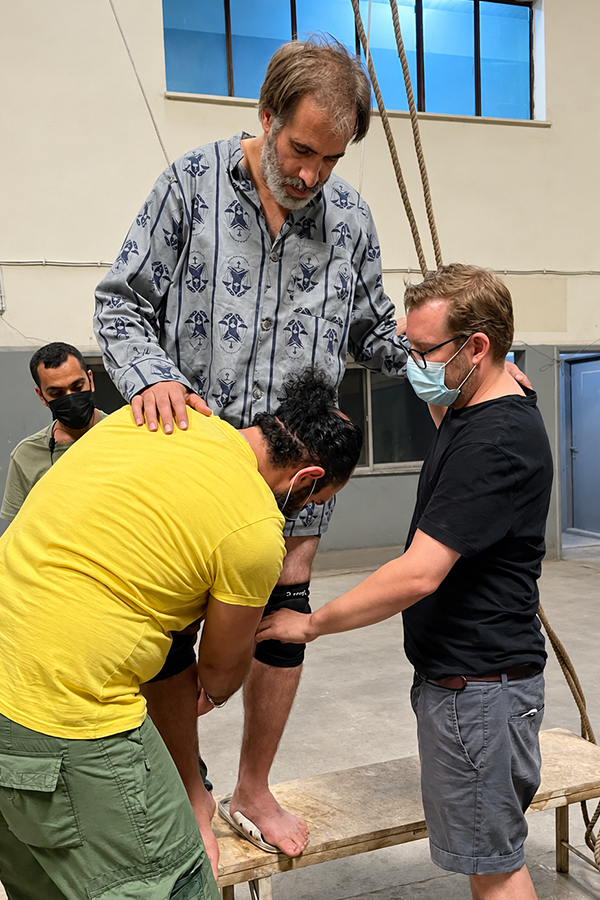
When Holy Spider first screened in Cannes competition, some audiences struggled with its violence. Why show so much? Why linger? Why ask viewers to remain with something so disturbing? Then the world changed.
In September 2022, Mahsa Amini died after being arrested by Iran’s morality police. Protests spread across Iran under the banner of “Woman, Life, Freedom.” Nothing inside Holy Spider changed. Everything outside it did.
“It almost became a documentary.”
Questions that once focused on cinematic violence became questions about lived reality. The film remained unchanged, but viewers encountered it differently because the world had changed around it. Bondy remembers one screening in particular. The London Film Festival.
The audience included many members of London’s Iranian community. People stayed. The applause continued through the end credits.
“Jin, Jiyan, Azadi—Woman, Life, Freedom,” the audience began chanting.
Standing beside the curtain, the key crew watched with goosebumps. Groups formed throughout the theater. Strangers began talking. The film had ceased to be simply something they watched. It had become something they shared.
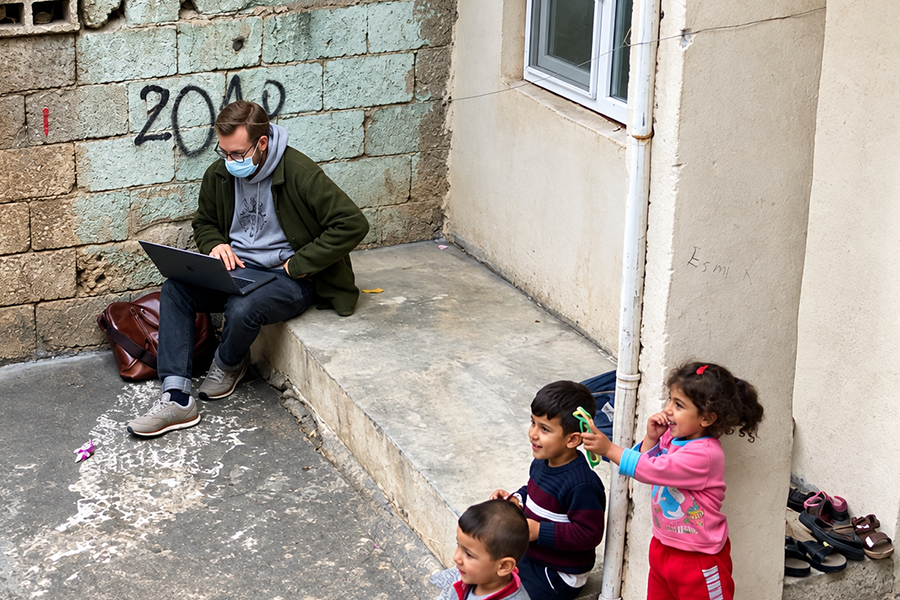
Listening to Bondy describe the evening, I noticed he never measures a film by ticket sales, audience size or reviews. He measures it by what happens after the credits roll.
Earlier, I had asked why so many of the films he produces seem drawn to societies under pressure. Rather than talking about politics, he talked about perspective.
“I think what we gravitate toward are films that tackle the bigger picture.”
Almost immediately, he redirected the focus away from himself.
“As producers, we rarely decide who the main character is or how the story is told. Of course we give input, but I always think of a producer as the first audience member.”
The phrase lingered long after our conversation ended. The first audience member. Not the first executive. Not the first financier. The first person responsible for asking: Does this story reach another human being?
Seen through that lens, much of Bondy’s career falls into place. Watching Grzegorz Muskala direct. Sitting beside an editor in Germany. Calling festivals a second time. Each decision begins from the same place. The audience. Not as a market. As people.
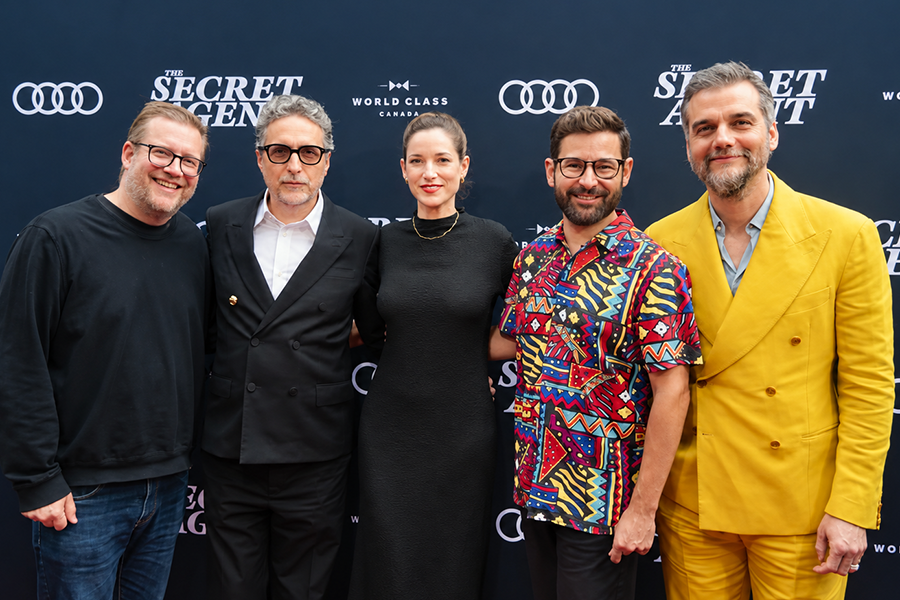
Recognition arrived gradually, then almost all at once. Cannes, Berlin and Toronto followed, and eventually the Academy Awards. When I ask what success means to him now, he doesn’t dismiss awards.
“The Oscars are an undeniable spotlight for filmmakers, no doubt.”
The spotlight meant visibility, opportunity and momentum. Then he shifts the conversation elsewhere.
“That’s not how I measure success.”
Instead, he talks about movie posters from France, Japan, Mexico and Sweden. These are places where audiences have no personal connection to the filmmakers. They do not share the same language or history.
“I still get the most satisfaction out of seeing when our films travel around the world and connect with audiences in many different cultures.”
Not a trophy. Not a red carpet. A poster. Printed in a language he cannot read. Proof that a story has crossed another border.
“For me,” he says, “that’s the ultimate stamp of approval.”
Near the end of our conversations, I ask whether there are still stories he hopes to tell. He mentions one that never happened.
For years, he developed a series inspired by Animal Traffic, a documentary his father had made decades earlier. He imagined an international crime drama centered on the global trafficking of endangered animals. It never moved forward.
Eventually, the project taught him something about himself.
“What I learned is that I don’t want to make series. I want to stick to making feature films.”
Even an unrealized project became another act of recognition. Recognizing what belonged to him. And what didn’t.
The Passage Between
Early in our first conversation, Bondy told me he had never felt a particularly strong sense of nationality. At the time, it sounded like an unexpected answer to an ordinary question. By the end of our interviews, it felt like the thread running through everything that followed.
His childhood never taught him where he belonged. It taught him how to enter worlds that weren’t his own with curiosity instead of certainty. How to listen before speaking. How to recognize people before judging them. How to move between cultures without asking any of them to become smaller.
Producing became an extension of that instinct. The best producers are rarely the loudest people in the room. Their work is measured less by what they create than by what they make possible. They recognize, connect and enable.
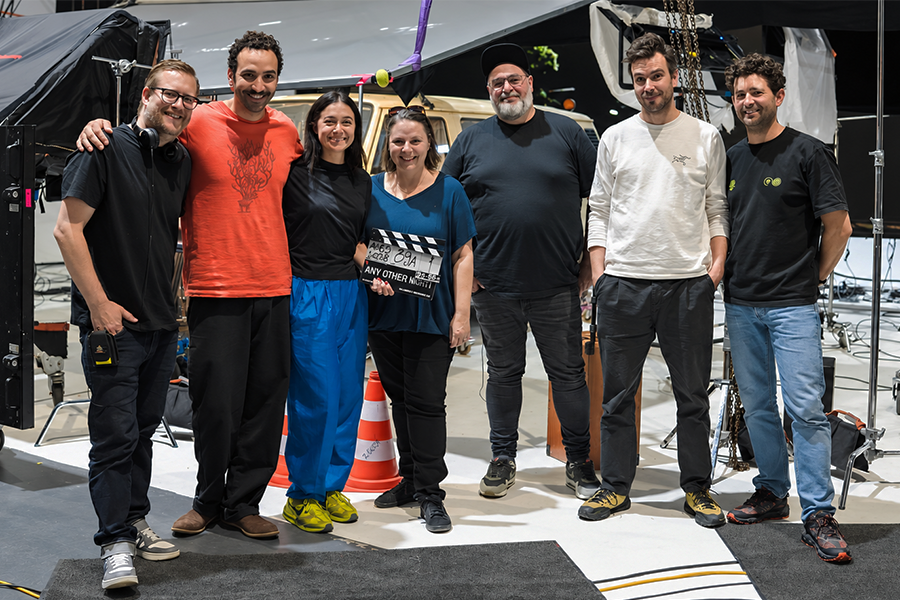
But Bondy has been shaped by the people around him, too. The directors he has supported, the colleagues he has worked beside and the people he has helped along the way have all influenced the producer he has become. Perhaps that is part of being the first audience: knowing when to listen, when to learn and when to believe in someone enough to help them succeed.
Near the beginning of our conversations, Bondy apologized for sounding sentimental about wanting his films to “make the world a better place.” By the time we finished talking, it no longer sounded like an apology for optimism. It sounded like the clearest description of a career built not on crossing borders, but on helping other people cross them.