

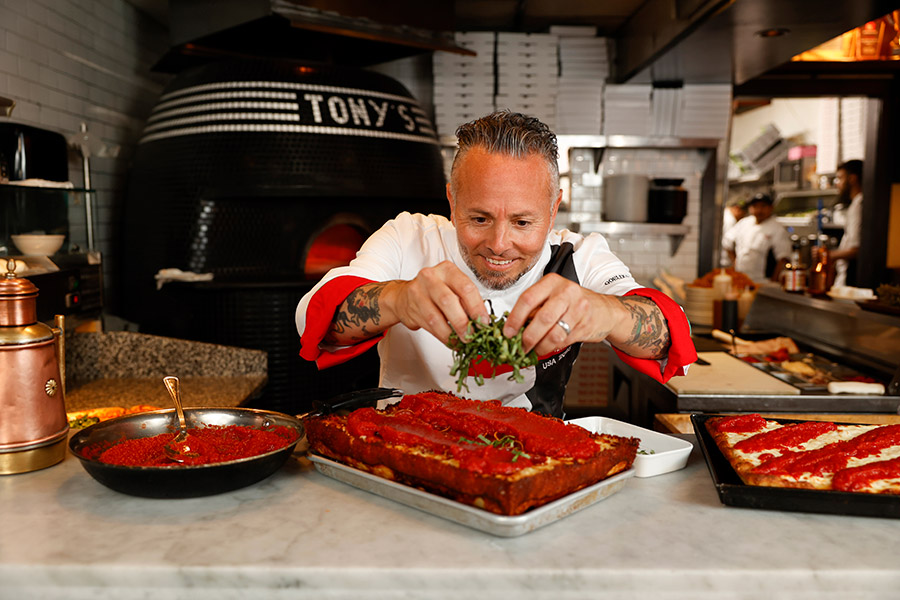
There are chefs who perfect a dish, and then there is Tony Gemignani, who has spent decades deconstructing, traveling, and rebuilding pizza into a living, breathing ecosystem. In a culinary era driven by shortcuts and digital imitation, his story reads like a countercultural manifesto: mastery through immersion, scale through patience, and legacy through relentless hands-on execution. From a teenage dream in Northern California to becoming a world champion in Naples, Italy, his journey is less about pizza and more about the discipline of becoming.
Millennial Magazine caught up with Gemignani for an exclusive conversation that traced the inflection points behind his rise, the philosophy shaping his expansion, and the mindset that continues to define his leadership today. What became immediately clear, even before we got into the technicalities of dough and ovens, was that his success was never accidental. It was engineered, patiently, and often against conventional timing.
“I didn’t look at [pizza] as a nine-to-five,” he told me early in our conversation. “I thought there was a lot more [to the space].”
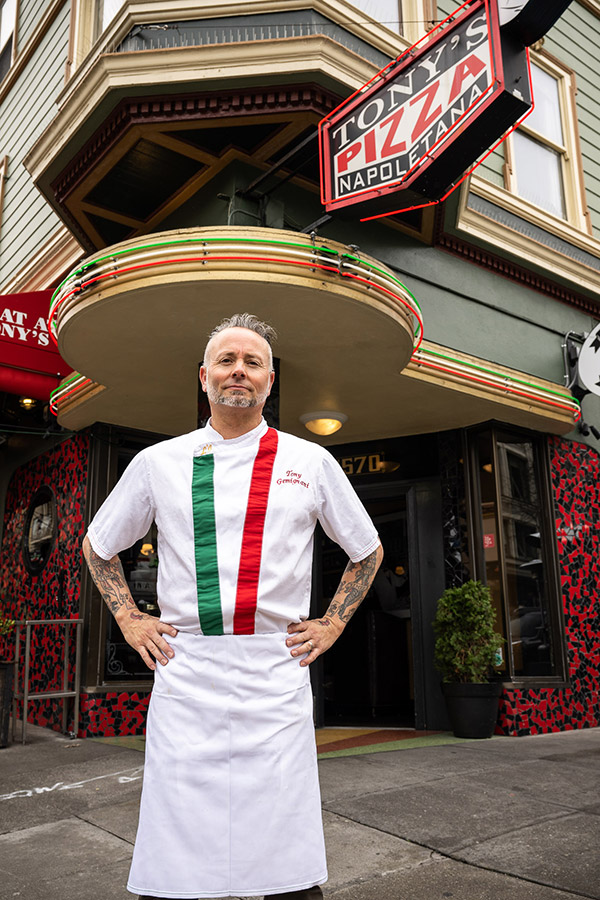
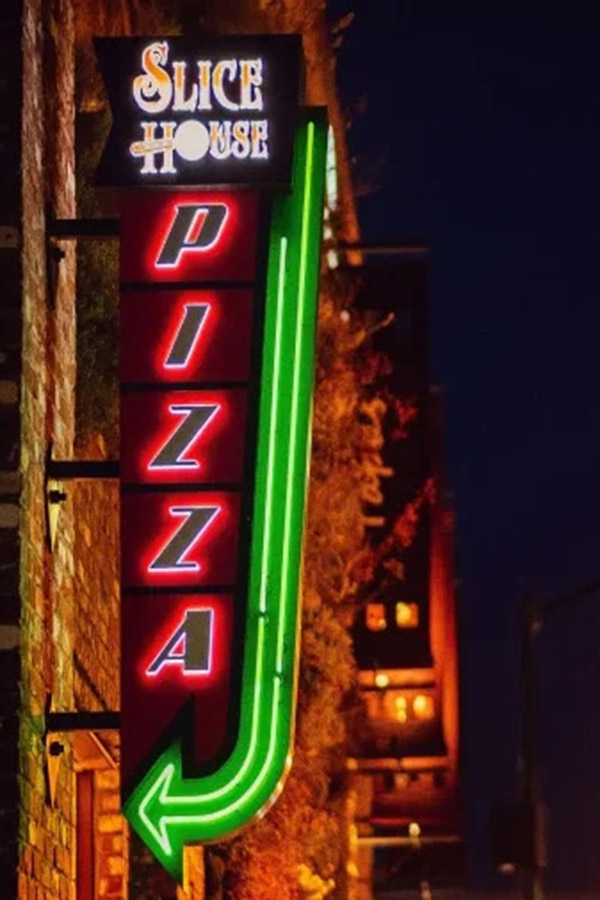
That “more” would eventually evolve into a multi-layered empire, anchored by his flagship restaurant Tony Pizza Napoletana and accelerated by the fast-growing success of his franchise, Slice House, a concept redefining how premium pizza scales without losing its soul.
Tony Gemignani and the Moment Everything Clicked
To understand the scale of his success, you have to begin with restraint. Unlike many modern founders who chase speed, Gemignani built his career slowly, almost defiantly so. He spent 17 years working in his brother’s pizzeria before opening his own restaurant, a timeline that would feel unthinkable in today’s startup culture.
“I was mad at the time… because I didn’t get my opportunity,” he admitted, reflecting on the nearly two decades he took to refine his craft instead of directly stepping into ownership. “But [my business] would have never been what it is today if I would have gotten it too early.”
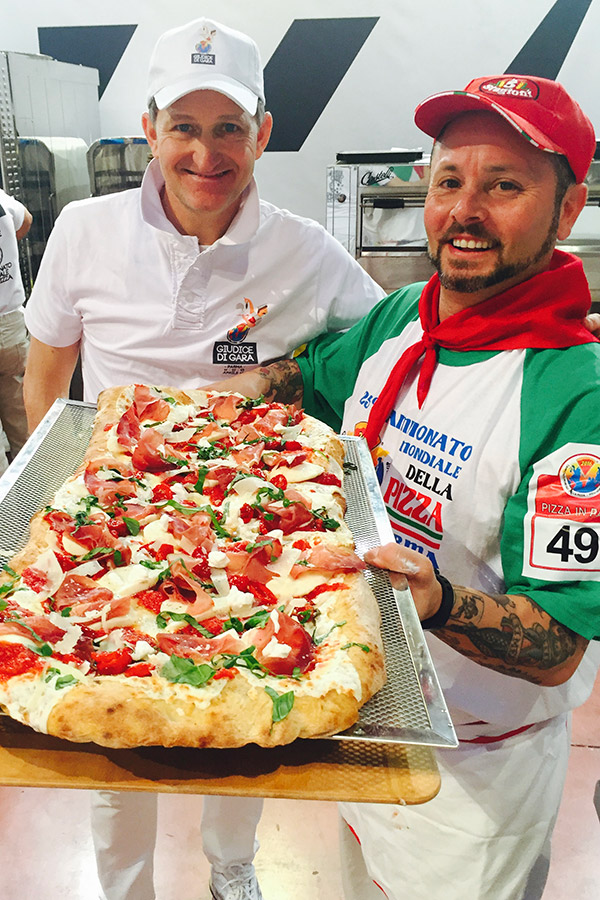
The real shift was from time to identity.
Speaking with him, it became clear that there was a point where he stopped thinking like someone trying to open a pizza shop and started thinking like someone building a system. The difference is subtle, but everything. One approach chases output. The other engineers repeatability.
For Gemignani, time was not a delay. It was infrastructure.
Every trip, every kitchen, every regional style became a layer in what he now calls his “pizza persona,” a body of work built through immersion rather than imitation.
He didn’t learn Detroit-style pizza from a screen. He went to Detroit. He didn’t approximate Neapolitan technique. He studied it in Italy, inside the kitchens that defined it.
“If you wanted to really know what a Detroit style pizza was, you went to Detroit… [same with] Chicago, New York, Neaopolitan,” he explained.
That commitment to first-hand experience is not just romantic. It was strategic. And it is what allows him, decades later, to move fluidly across formats, markets, and operational constraints in ways most chefs cannot.
The Naples Decision That Redefined Authority
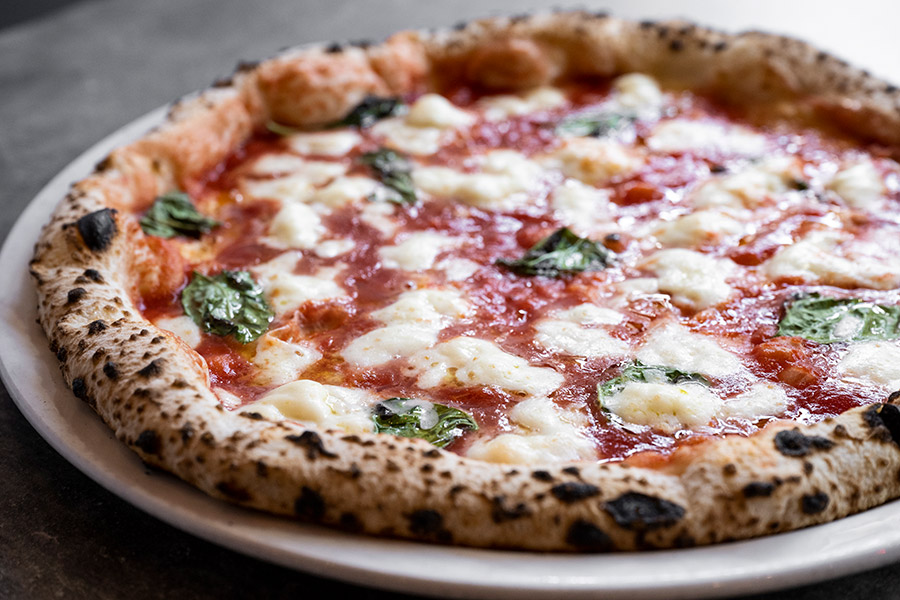
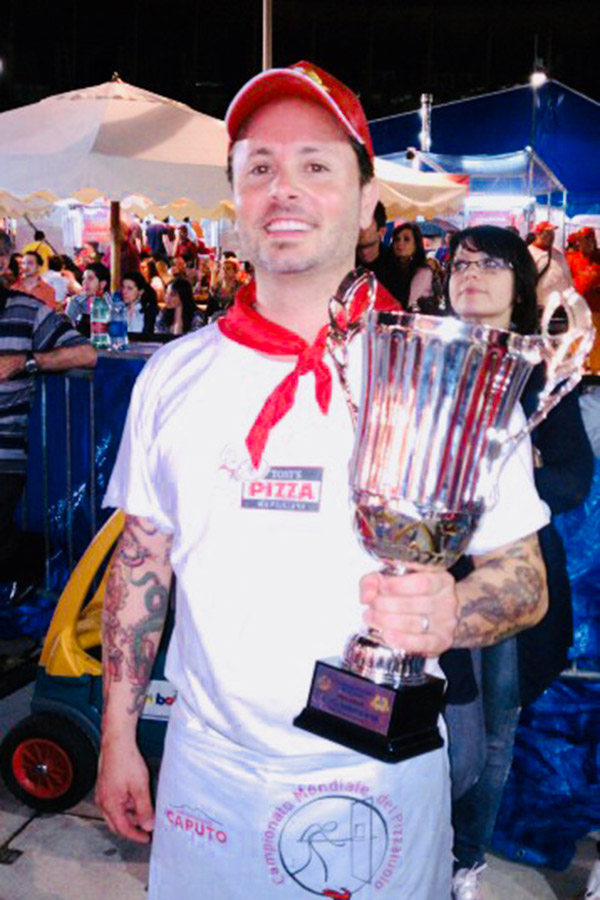
In 2007, everything crystallized. Competing in Naples, the epicenter of Neapolitan pizza, Tony Gemignani entered the World Pizza Cup as a non-certified outsider. The category was deceptively simple: Margherita pizza.
“It’s like the easiest pizza, but at the same time, the hardest pizza to make,” he told me.
The margin for error was razor thin. Ninety seconds to execute. Strict ingredient standards. Generations of Italian pizzaiolos competing on home soil.
What stood out in his recounting was not bravado, but precision. He wasn’t trying to outshine the room. He was trying to understand it more deeply than anyone else in it.
While competitors opted for bottled water to control variables in their dough, Gemignani made a decision that could have easily backfired. He used the local tap water.
“It was the one time I ever did it… I used the water out of the tap to make the dough,” he said.
It sounds small, but it reflects a larger pattern. He trusted his understanding of environment over manufactured consistency. He leaned into context instead of resisting it.
That decision did more than win him the title. It marked the moment where instinct, experience, and execution aligned. And this was the turning point where he stopped proving himself and started defining the standard.
Building an Ecosystem, Not Just a Restaurant
After Naples, the opportunity was obvious. The business plan was not.
“Pizza is very much like baseball… people pick sides,” he said. “You’re a Giants fan, you’re a Dodgers fan. You’re a Boston fan, you’re a New York fan. Pizza is very much like that. I like Chicago. I hate New York.”
His response was not to choose. It was to unify.
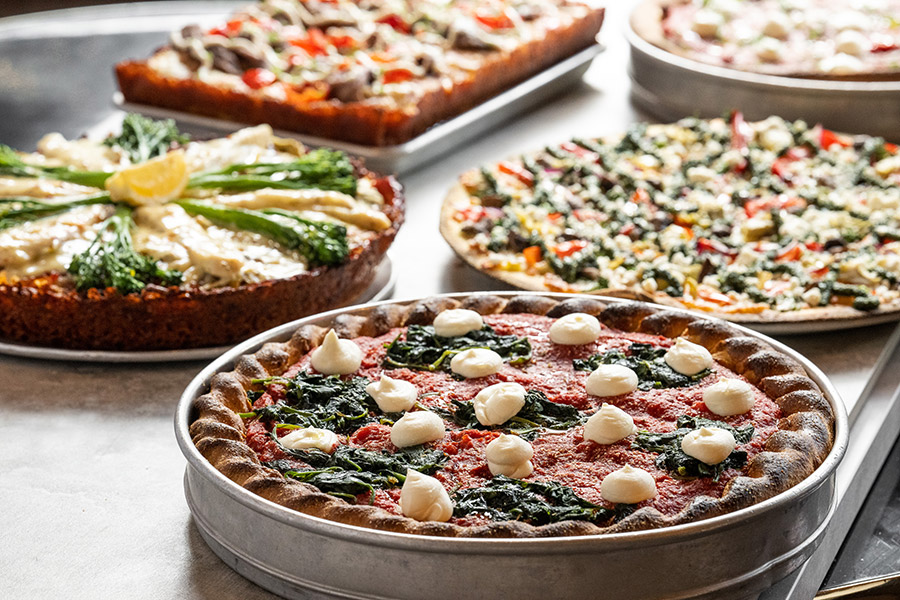
Instead of opening a single-style pizzeria, he built something far more complex. A multi-oven, multi-style destination that brought together Neapolitan, Detroit, Sicilian, New York, Roman, and more under one roof.
At the time, this was not just unconventional. It was almost contradictory.
What he built was not just a restaurant. It was an ecosystem. One that allowed for variation without fragmentation and scale without dilution. This decision, more than any single accolade, is what positioned him as a category expander rather than a category participant.
“I always wanted Tony’s to be iconic. I wanted to make it memorable. I wanted to make it unlike anything else around. There could be carnivals and fairs that come around, but there’s only one Disneyland. I wanted it to be like that.”
Tony’s Napoletana quickly became the flagship restaurant in a soon to be growing portfolio of properties.
Slice House and the Shift from Craft to Distribution
If his flagship restaurant represents mastery, Slice House represents awareness.
The idea did not come from a growth strategy. It came from observation, specifically what was happening right outside his front door.
“Tony’s opened up, and right next door to it was a deli. I looked at that deli, and I said, what does everybody hate about Tony’s? Convenience, body slice, maybe [it could be] a little more affordable. That 16-year-old that’s on a skateboard, maybe doesn’t want to go to the full-service restaurant. Maybe they just want to grab a slice and go to the park,” he said.
Within five months of Tony’s Napoletana opening, Slice House was born next door, not as a secondary concept, but as a direct extension of how people actually wanted to engage with his pizza. It offered something deceptively simple: access. A way to experience a “slice” of each style he had spent decades mastering, without the formality of in-room dining.
“It needed to be a little cooler, a little younger, and a little edgier… to match the clientele,” he explained.
He didn’t dilute the product. He reformatted it. Detroit, Sicilian, New York, and Grandma, all available by the slice, all rooted in the same standards that defined his original kitchen.
That decision created something bigger than a convenient format. It created a system that could travel.
Because once you can deliver high-quality pizza by the slice, consistently, across styles, you are no longer limited to a dining room. You can move into environments where time and volume matter, such as stadiums, arenas, and high-traffic spaces where the expectation is speed and quality.
And that is exactly what happened. Sports fans in San Fransico didn’t want another generic option like Pizza Hut or Dominos. They wanted something better. They wanted Slice House.
At the same time, Gemignani was quietly building the infrastructure behind the experience. As demand grew for both Napoletana and Slice House, so did the need for control over quality and supply. Instead of outsourcing, he internalized.
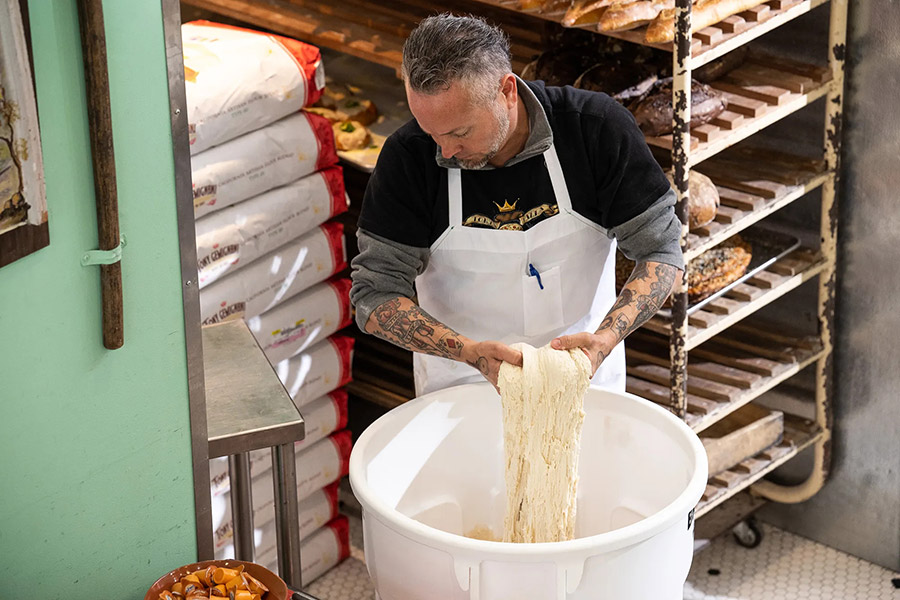
He opened Capo’s to provide the North Beach neighborhood and his restaurant fresh pasta. He launched Toscano Brothers to produce the bread his restaurants could no longer keep up with in-house.
Each move solved a real operational constraint while reinforcing the larger system. Nothing was random. Everything fed the ecosystem.
And once that system proved it could hold, across formats, environments, and teams, the next evolution became inevitable.
Scaling Without Losing the Soul
Growth introduces pressure. For many founders, it exposes limitations. But for Tony Gemignani, it revealed versatility.
“I can make pizza out of any oven,” he said in response to his growth within stadiums and arenas. “Other chefs may say it has to be this [oven] or the deal’s done. I don’t. I can adapt to any oven.” This philosophy stems from his deep knowledge and expertise on pizza styles.
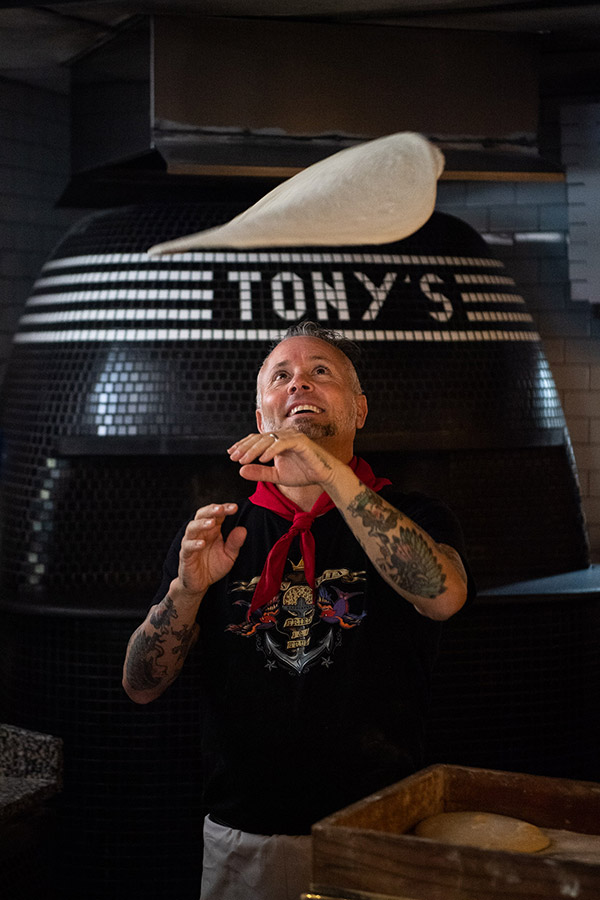
He has built systems that can operate across different ovens, footprints, and environments. From 900-square-foot Slice House locations to tiny kiosks inside stadiums, the model flexes without breaking.
“It’s about quality and speed,” he emphasized.
But what is often overlooked is how difficult that balance is to achieve. Speed without quality becomes commoditized. Quality without speed becomes inaccessible. His success lies in refusing to compromise on either.
This is where Gemignani’s work intersects with the broader creator economy. He has effectively turned craftsmanship into a scalable asset without stripping it of its identity, a challenge many creators face as they grow beyond their original platform.
Culture as the Real Filter
When the conversation shifted to franchising, another layer of his philosophy emerged. For him, scale is not just operational. It is cultural.
“A restaurant is more than an investment… it’s your life,” he said.
This is not a throwaway line. It is the filter through which he evaluates partners.
One of his most successful franchise groups didn’t come from the restaurant world at all. They were a family-run business selling shutters, with no traditional kitchen background.
At first, it seemed like a mismatch. No culinary training. No operational history in food service. But what they did have was something harder to teach: discipline, systems thinking, and a deep understanding of community relationships.
What stood out was how they immersed themselves in the process, built strong local connections, and treated the brand like it was their own from day one. In doing so, they challenged a long-held industry bias that restaurant experience is the primary predictor of success.
For Tony Gemignani and his bourgeoning franchise, it reinforced a different truth. Skill can be taught. Alignment cannot.
The Work Behind the Image
It would be easy to assume that at his level, the work can become abstract. But for Gemignani it hasn’t.
“I love front of house, and I’m not a chef that hides in the kitchen,” he said.
He still steps into kitchens. He still engages with teams. He still tests systems in real time.
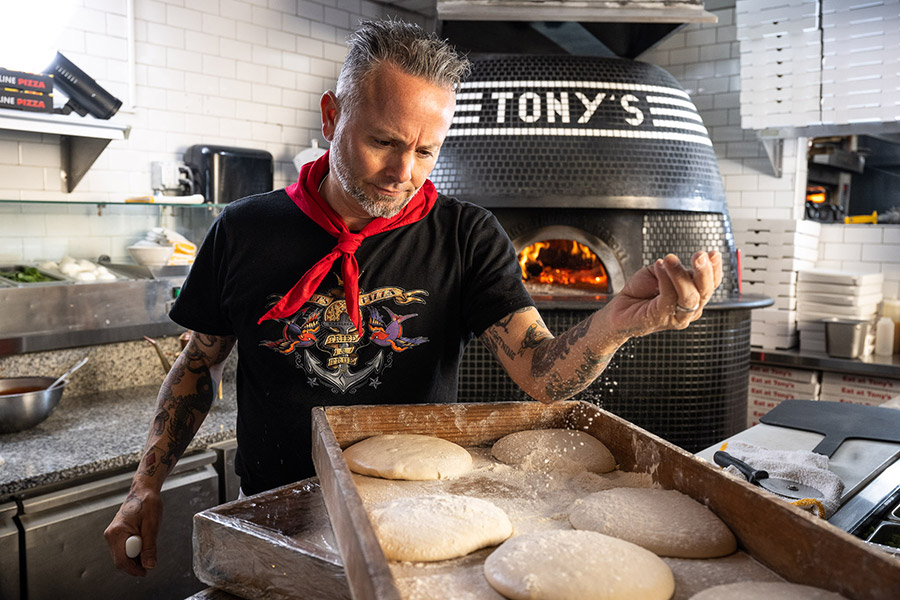
With 150 Slice House franchises open or in development, 11 owned and operated restaurants, and a personal brand beloved by thousands, Gemignani is poised to balance leadership with execution. There is no detachment and no distance in his daily workflow.
“Sometimes they want to see you get your hands dirty,” he added.
That presence reinforces trust, internally and externally. It signals that his brand is fully lived, not just managed.
The Enduring Legacy of a 13-time World Pizza Champion
What makes Tony Gemignani compelling is not just his accolades. It is his ability to evolve without disconnecting from the core of what made him successful in the first place. He has moved from operator to visionary without abandoning the discipline of execution, from craftsman to systems builder without losing respect for the craft.
Slice House is not just a growth story. It is proof that scale, when done intentionally, can amplify identity rather than dilute it.
And perhaps that is the real takeaway. The most sustainable success does not come from chasing expansion. It comes from building something strong enough to expand.
Try This: Build Depth Before You Chase Scale
For founders and creators reading, the most transferable lesson is not about pizza, but about timing and depth.
Instead of accelerating prematurely, invest in building a foundation that can actually support growth. That might mean delaying launches, expanding your skill set, or immersing yourself in the environments you want to serve.
As Gemignani put it, “Everyone has a different path… sometimes you want something so fast, you don’t realize there might be a reason behind waiting.”
That perspective reframes delay as preparation, and turns patience into strategy.
FAQ
Who is Tony Gemignani?
Chef Tony is a world-renowned pizza chef, restaurateur, and entrepreneur known for winning the World Pizza Cup in Naples 13 times, and building a diverse portfolio of pizza concepts.
What is Slice House?
Slice House is a fast-casual pizza concept founded by Chef Tony G, designed to deliver high-quality, artisan pizza in a more accessible, grab-and-go format.
How did Tony Gemignani become successful?
His success is rooted in decades of hands-on experience, international travel to learn regional pizza styles, and a disciplined approach to building his business over time.
What makes Slice House different from other pizza chains?
Slice House combines premium ingredients and traditional techniques with scalable systems, offering both quality and convenience without compromise.
Can beginners franchise with Slice House?
While experience helps, Tony Gemignani values cultural alignment and operational mindset just as much as industry background when selecting franchise partners.