

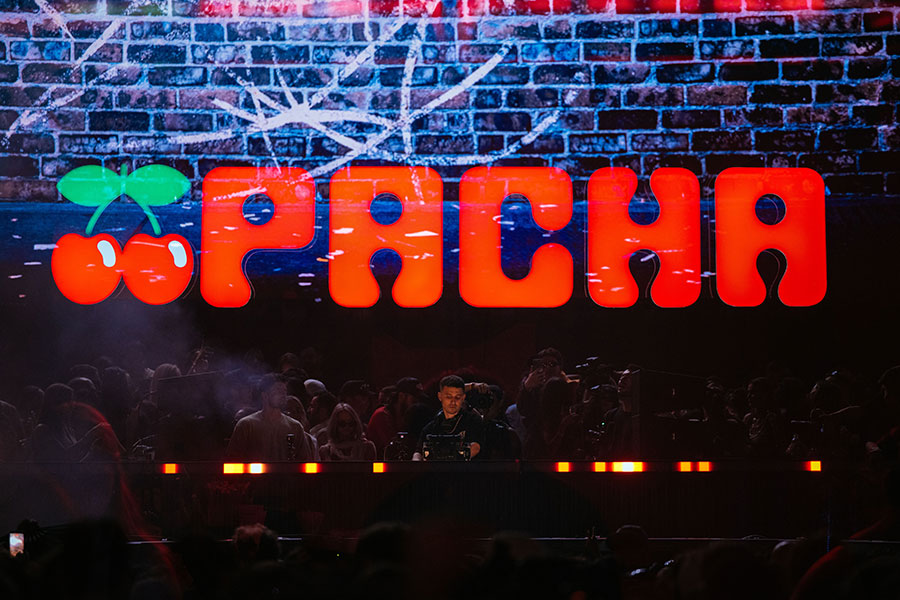
If you’ve spent any time around New York’s dance music scene this summer, one name has been impossible to avoid. Pacha, the Ibiza born institution that has shaped global club culture for over fifty years, finally came back to New York this June after a decade away. The new home sits in East Williamsburg, on the exact ground where the Brooklyn Mirage once stood, and between the scale of the rebuild and the depth of the opening season, it already feels like the most significant addition to New York nightlife in years.
The timing could not be better. New York’s dance music scene has spent the past several years quietly rebuilding itself, with rooms like Basement and Knockdown Center cultivating a Berlin inflected club culture in the city and newer spaces like Refuge adding to the momentum, some going as far as placing stickers over phone cameras to keep the focus on the dancefloor. Pacha operates in a different lane entirely, a global superclub with festival scale production, and its arrival restores a dimension the city has been missing since 2016 while feeding into the same larger energy. New York nightlife, across every scale, is in the middle of a genuine resurgence.
A New York Homecoming
The brand’s roots trace back to Spain, where founder Ricardo Urgell opened the first Pacha in Sitges in 1967 before bringing the concept to Ibiza in 1973, inside a converted whitewashed farmhouse that grew into one of the most famous superclubs on earth. The cherries eventually traveled the world, stretching into hotels, fashion, and fragrance, and in 2023 Dubai based hospitality group FIVE Holdings acquired the brand for a reported $330 million.
New York, though, has always held a special place in the Pacha story. The original Pacha New York opened in 2005 inside a 30,000 square foot warehouse at 618 West 46th Street, a Hell’s Kitchen address that previously housed the legendary Sound Factory. For eleven years it reigned as the city’s international superclub, running right through the stretch when electronic music went fully mainstream in America, before closing in January 2016. Club president Eddie Dean noted at the time that most nightclubs survive around 18 months, while Pacha’s New York run stretched to 120.
The return comes with a level of investment that reflects how seriously the brand is treating its second New York chapter. FIVE Holdings took over the sprawling complex at 140 Stewart Avenue, rebuilt it from the ground up, and backed the project with a reported $27 million commitment over the next decade, establishing the venue as Pacha’s first permanent North American flagship.
Inside Pacha New York
The transformation is visible from the moment you walk in. At the center sits a sprawling open air dancefloor built around a dancefloor first philosophy, optimized for movement and capped at roughly 5,300 guests so the room stays comfortable even on sold out nights. Compared to the maximalist build that previously occupied the site, the new layout gives the crowd genuine space to move, which changes how an entire night unfolds.
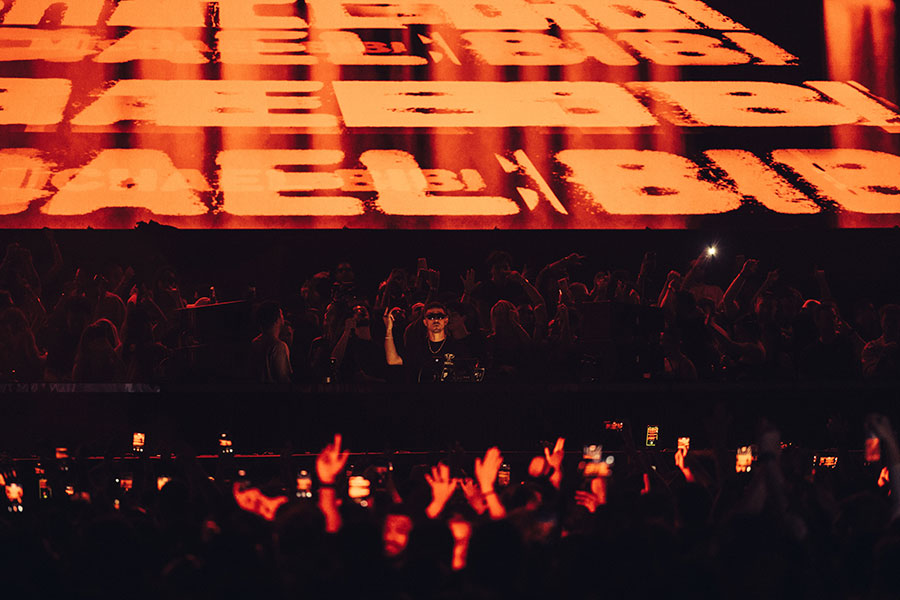
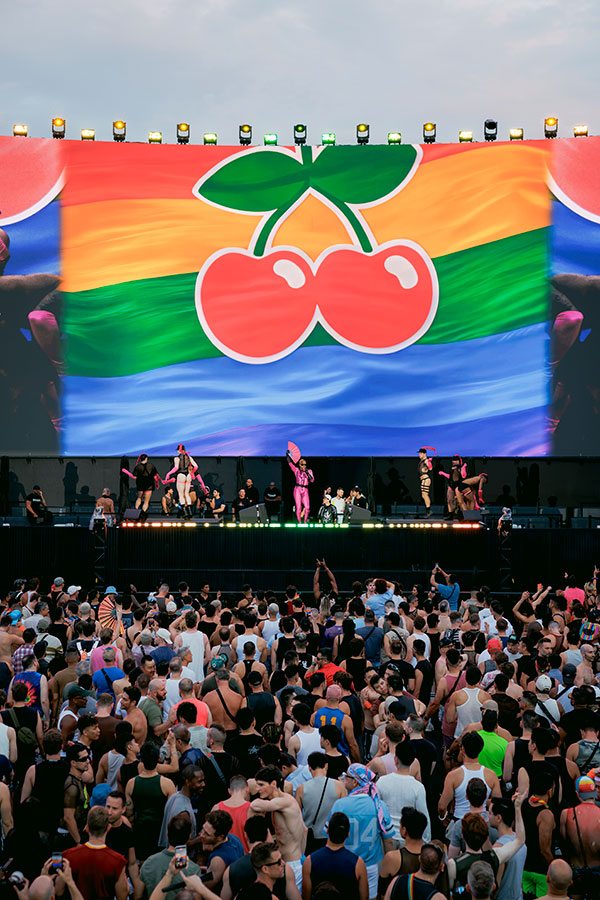
The production lives up to the setting. A towering LED screen, nearly 33 feet tall, anchors the stage and delivers visuals at a scale that wraps the entire floor into each set, while a D&B Audiotechnik sound system carries the audio with remarkable clarity. The streamlined stage design was built with marathon sessions in mind, the exact format that Pacha’s roster of headliners is known for.
The details throughout the space carry the same intention. Pacha’s signature cherry motif appears across the venue alongside deep red lighting that nods directly to the Ibiza mothership, while the VIP lounge raises the experience further with its own standalone bar pouring premium spirits from brands like Grey Goose, Clase Azul, and Patrón, plus backstage access for those looking to go deeper into the night.
A merch shop carries the brand’s standout clothing line, and even the bathrooms feel exceptionally elevated for a venue of this size. Practical touches round out the experience: complimentary charging stations and hydration stations placed throughout the space, entry systems capable of processing up to 3,000 guests per hour, and a dedicated cell tower keeping everyone connected through the night. Adjacent to the main floor, the indoor Great Hall holds up to 2,500 guests and operates year round, extending the programming well past the outdoor season.
Taken together, the space reads as an environment engineered around how people gather, move, and connect, considered at every touchpoint from the entry line to the last track.
Pride at Pacha: A Statement Weekend
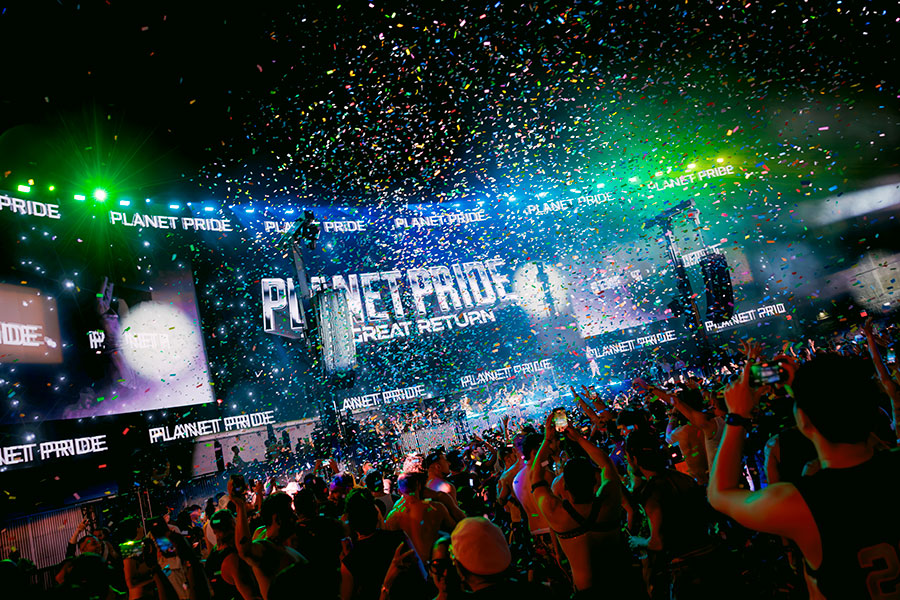
The opening weekend introduced the venue and Pride weekend continued the momentum. On June 27, Pacha New York hosted Planet Pride, veteran promoter Jake Resnicow’s production and one of the largest LGBTQ+ celebrations in the city, running nearly 12 hours across multiple stages. Loud Luxury, Don Diablo, and ACRAZE were positioned in the main room. RuPaul’s Drag Race stars Athena Dion and Juicy Love Dion went b2b. Ty Sunderland played, and the surprise appearances kept coming: Daya, Todrick Hall, Lion Babe. Meanwhile the Brazilian queer party series GUAPO ran its own program in the Brooklyn Hall, which gave the whole night a genuinely global pulse and was not something to be missed.
Entering the venue, I was completely blown away by the thoughtful branding and comfort of the space. Walking in further, the shock continued as we saw the massive stage and screens which exponentially increased the magnitude of the already incredible sets taking place. Even better, walking back and forth between the mainstage and GUAPO party allowed for us to have a well balanced experience taking in all sorts of sights and music that evening. By the later hours the floor was totally packed with everyone dancing, the bass reverberating through us, and not a phone in sight.
The decision to hand one of its first marquee weekends to queer nightlife says a great deal about how Pacha New York understands the city it now calls home. New York dance music history runs straight through its queer spaces, Paradise Garage most famously, and by centering that community from the very start, the venue positioned itself inside that lineage rather than apart from it.
What Comes Next
The launch set the tone for everything that followed. Solomun broke a ten year New York hiatus to headline opening night, Michael Bibi and Black Coffee followed with sold out dates, and Black Coffee has since settled into a full residency. Even the pre opening weekend, curated by Rampa, brought Danny Tenaglia, Raekwon, and Ghostface Killah into the room.
From there, the season reads like a festival poster stretched across five months. July brought Vintage Culture, a Fourth of July takeover from SLANDER and NGHTMRE, two sold out ANOTR nights, and Barcelona’s famously theatrical elrow for a two night run. August keeps going with ARTBAT, ALOK, Lost Frequencies, an all night session from Loco Dice, Seth Troxler, and Victor Calderone on the 21st, and Franky Rizardo closing the month. The fall stretch has GORDO, ZHU, Indo Warehouse, BLOND:ISH, more Black Coffee dates, and Madeon in November.
Halloween weekend brings one of the season’s biggest bookings yet, with Grammy winner Kaytranada taking over Pacha New York on October 30 before Purple Disco Machine closes out the holiday on October 31 with his signature disco house sound. Tickets for all announced dates are available through the venue’s official website, with the outdoor season running into the fall and the Great Hall carrying programming beyond it.
Look closer at those bookings and a strategy emerges. Global icons share the calendar with New York’s own house lineage, from Masters at Work legends like Louie Vega and Kenny Dope on down to local collectives and promoters, creating a season where homegrown names share top billing with international headliners and every corner of the city’s dance community is served. The scene now has its large scale anchor back, operating in step with the underground rooms that have kept the culture thriving.
The Bottom Line
New York has spent ten years telling stories about the clubs it lost. Now the city is living through a genuine nightlife renaissance, and Pacha’s return stands as the clearest confirmation of it yet. From the underground rooms shaping a new club culture to a global superclub planting its flag in Brooklyn, the scene is expanding in every direction at once, and it will be exciting to see what this next era holds as New York continues to grow and transform.
